
Research and Rewards – The Beckley Foundation Psychedelic Science Seminar 2015
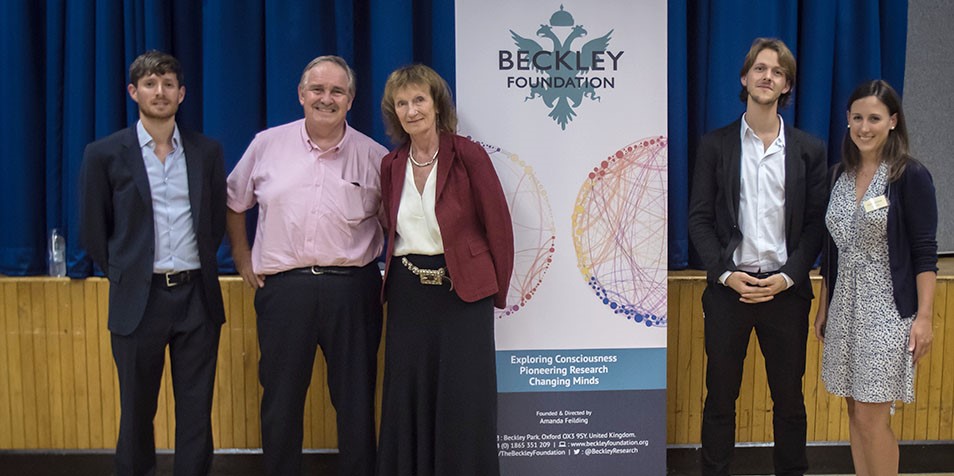
Last Wednesday 16th of September, we hosted the Beckley Foundation Psychedelic Science Seminar 2015, a celebration of the pioneering research that we have co-developed through the Beckley/Imperial Psychedelic Research Programme since 2009. At the centre of this gathering was the presentation of preliminary results for our latest project, the first-ever brain imaging study on LSD.
This exciting event was the culmination of an innovative crowdfunding drive enabled byWalacea, a platform with an exclusive focus on scientific research. The campaign, which ran for 45 days, was a massive success, surpassing its initial £25,000 goal in just 48 hours and more than doubling it by its target date. As Amanda Feilding, Director of the Beckley Foundation and Co-Director of the Beckley / Imperial Research Programme, said on the night; ‘crowdfunding is a great and exciting new democratic way of raising money for research – a positive outcome of our globally interconnected world’.
There was a fascinating introductory talk from Amanda Feilding, discussing her lifelong commitment to the study of psychoactive substances and drug policy reform. Her talk can be read in full here. Professor David Nutt, Co-Director of the Programme, and Dr Robin Carhart-Harris, Lead Investigator, then presented the research and preliminary results to an enraptured audience. Mendel Kaelen, a Beckley Research Fellow at Imperial College, further expanded on the recent work of the Research Programme with insights into hisongoing research on music and LSD.
The seminar was a reward for backers of the project and they showed their enthusiasm for the subject in a lively question and answer session. As a further perk, a drinks reception was held after the seminar where the discussion between the research team and the project supporters carried on full flow.
This event highlights the growing interest in psychedelic science and also the new modes of engagement that online communications and platforms allow. The overwhelmingly positive response by the general public, and in particular the hundreds who backed the campaign, humbles us and motivates us to continue breaking ground at the frontiers of prohibition.
The results from our LSD research are currently undergoing review in preparation for publication. Further details will be announced upon publication.
Click here for a summary of our research on psychedelics.
Podcast
- All
Links
- All
Support
- All
BIPRP
- All
Science Talk
- All
Amanda's Talks
- All
- Video Talk
- Featured
- 2016 Onwards
- 2011-2015
- 2010 and Earlier
- Science Talk
- Policy Talk
One-pager
- All
Music
- All
Amanda Feilding
- All
Events
- All
Highlights
- All
Psilocybin for Depression
- All
Current
- All
Category
- All
- Science
- Policy
- Culture
Substance/Method
- All
- Opiates
- Novel Psychoactive Substances
- Meditation
- Trepanation
- LSD
- Psilocybin
- Cannabis/cannabinoids
- Ayahuasca/DMT
- Coca/Cocaine
- MDMA
Collaboration
- All
- Beckley/Brazil Research Programme
- Beckley/Maastricht Research Programme
- Exeter University
- ICEERS
- Beckley/Sant Pau Research Programme
- University College London
- New York University
- Cardiff University
- Madrid Computense University
- Ethnobotanicals Research Programme
- Freiburg University
- Medical Office for Psychiatry and Psychotherapy, Solothurn
- Beckley/Sechenov Institute Research programme
- Hannover Medical School
- Beckley/Imperial Research Programme
- King's College London
- Johns Hopkins University
Clinical Application
- All
- Depression
- Addictions
- Anxiety
- Psychosis
- PTSD
- Cancer
- Cluster Headaches
Policy Focus
- All
- Policy Reports
- Advisory Work
- Seminar Series
- Advocacy/Campaigns
Type of publication
- All
- Original research
- Report
- Review
- Opinion/Correspondence
- Book
- Book chapter
- Conference abstract
- Petition/campaign
Search type